
Be aware of your personality
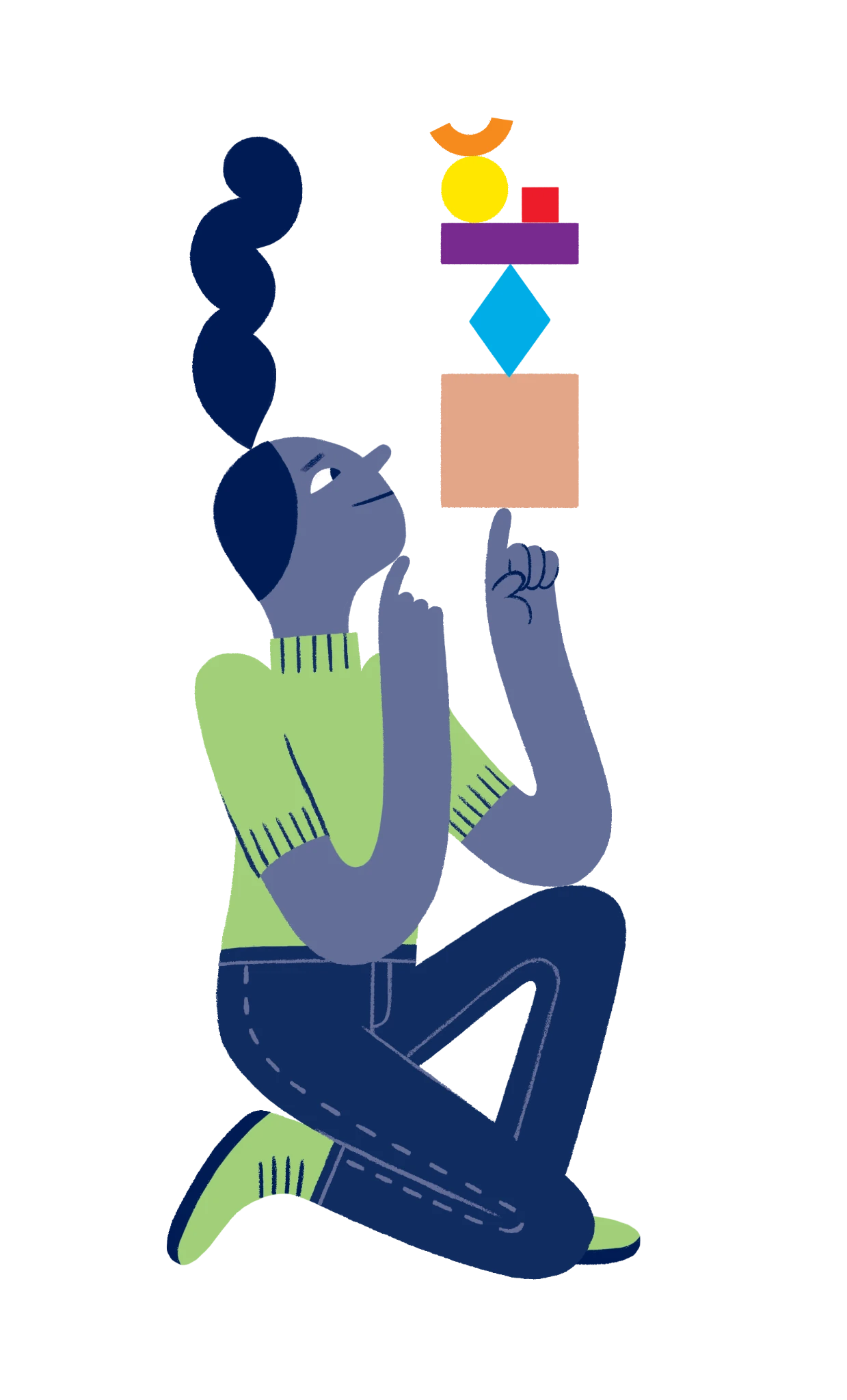
Understand your own preferences, psychological needs and the conditions that help you stay resourceful.
What participants learn
Understand your own preferences, psychological needs and the conditions that help you stay resourceful.

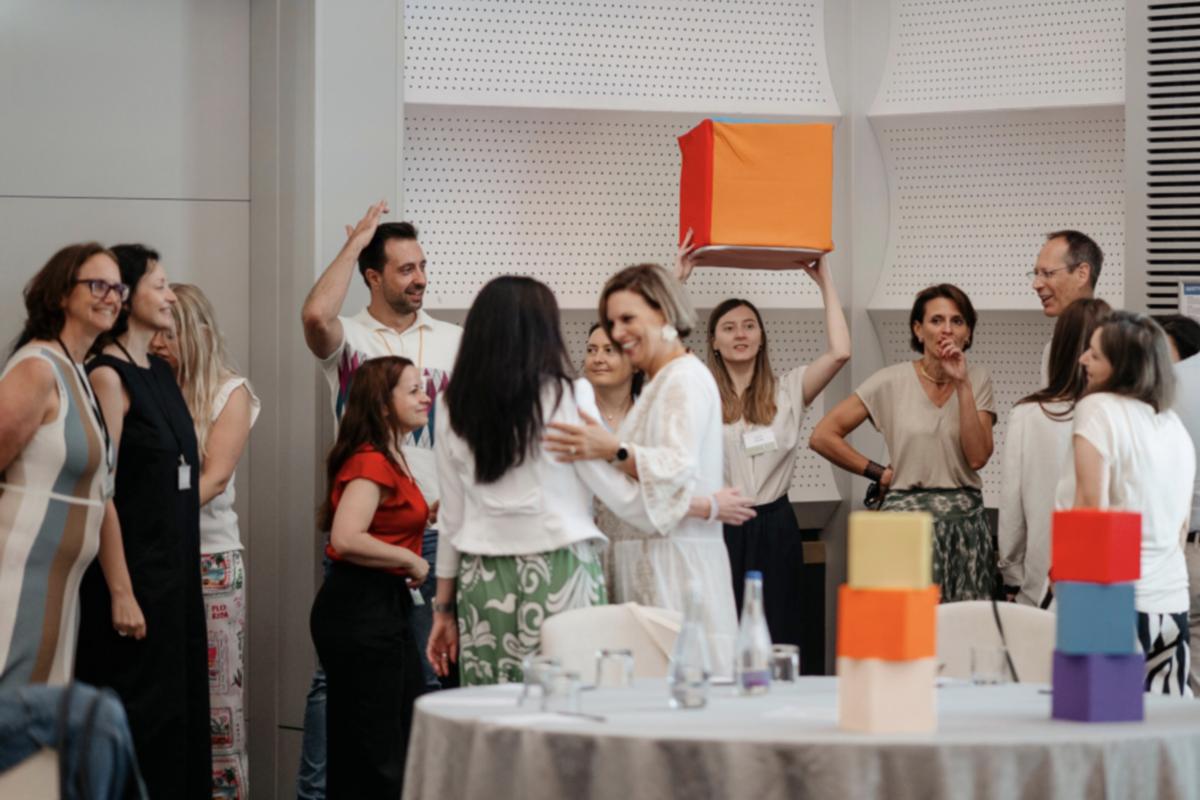
Learn to notice observable patterns in words, tone, behaviour and reactions instead of relying only on assumptions.

Choose how to speak and respond so the message is easier for a different person to hear and use.
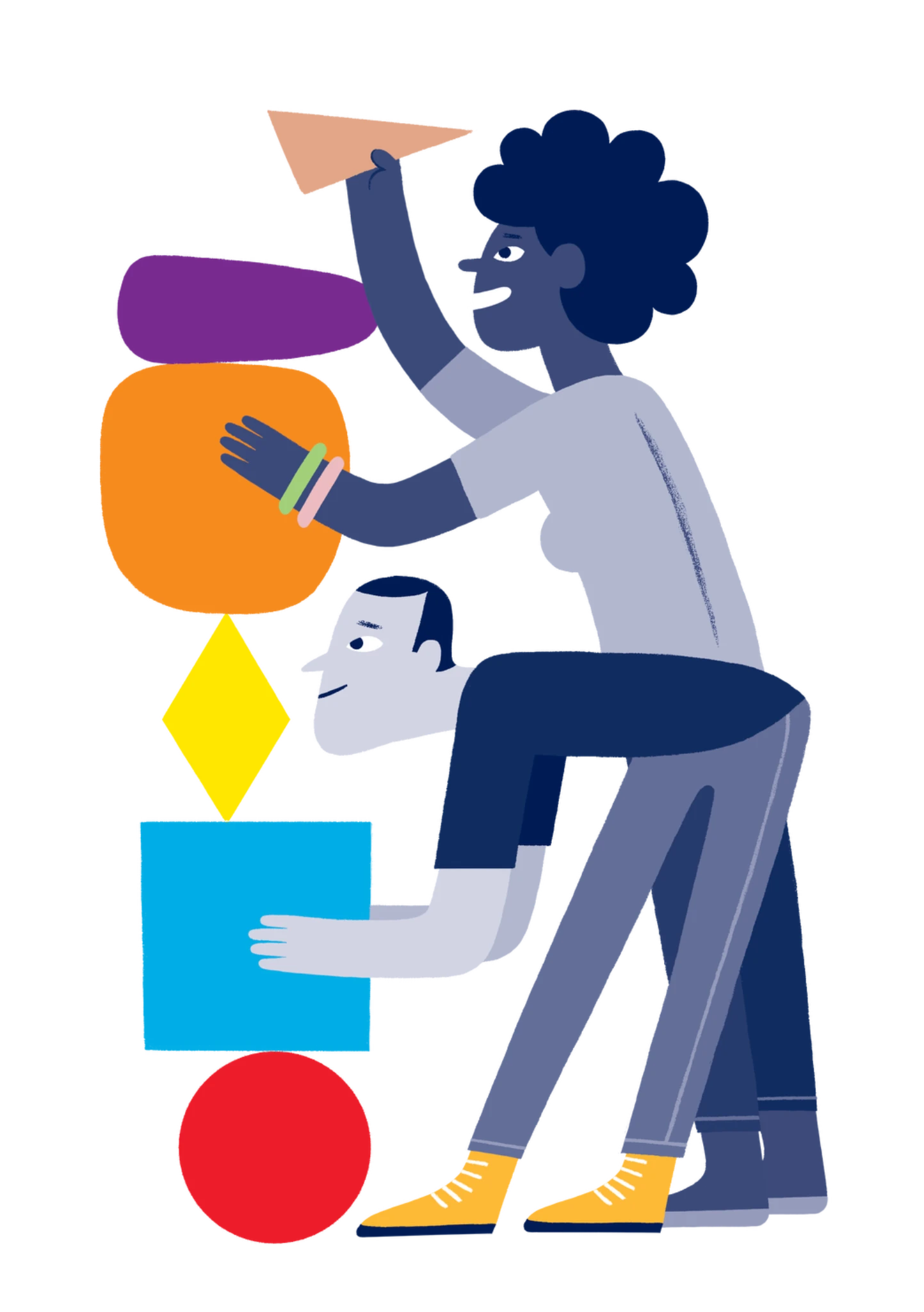
Use those skills in everyday conversations, meetings, feedback, pressure and difficult moments.
How training works
Participants get a clear, practical introduction to PCM and its core concepts.
Examples, discussions and exercises link the model to conversations participants already recognise from work.
The focus is not on memorising labels. It is on noticing more and having more options when communication matters.
Training formats
For teams and open groups
The full foundation of PCM: perception, communication channels, psychological needs and stress patterns.
It includes the official 26-page PCM personality profile.
A strong starting point for teams that want a common framework they can continue using after the training.
For leaders and managers
The core model through a leadership lens: adapting communication, motivating different people and responding to stress more effectively.
Participants receive an extended Leadership Profile with additional material relevant to leading others.
For deeper practice
For people who already know the PCM foundations and want to deepen their ability to recognise patterns and use the model more precisely.
The focus moves from understanding the framework to using it with greater fluency.
Individual profile
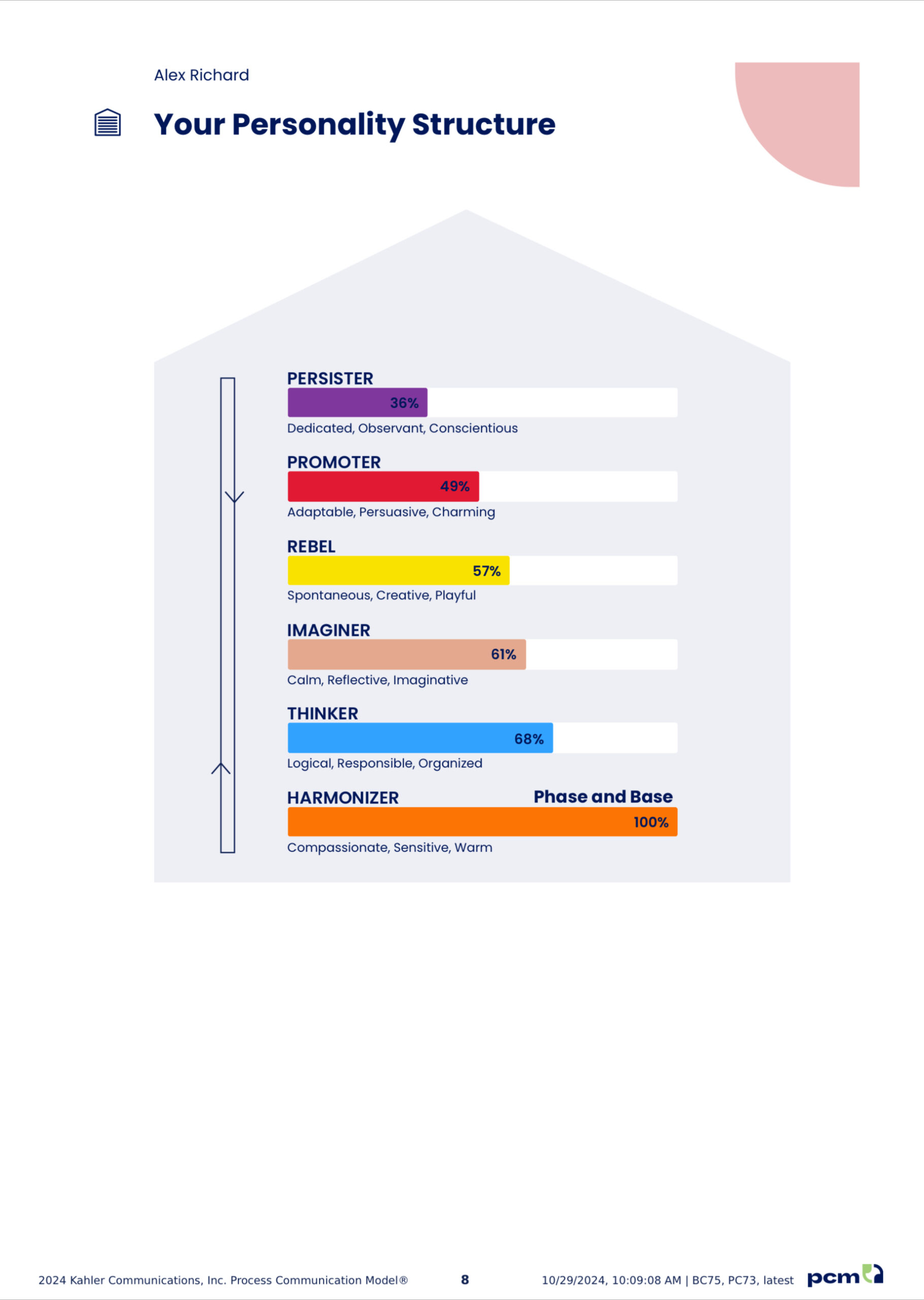
PCM training includes the official PCM personality profile. The standard profile is 26 pages and gives each participant a personal view of personality structure, communication preferences, psychological needs and stress patterns.
Leadership participants receive an extended profile with additional material relevant to leading others.
How teams benefit
Differences are recognised earlier, before they harden into personal tension.
People have more ways to communicate without constantly pushing against each other.
Team members can make more sense of behaviour that previously felt confusing or frustrating.
Different communication styles have more room to contribute.
A shared framework makes difficult periods easier to navigate together.
People are more likely to feel understood, respected and able to work in ways that suit them.
What participants say
“Thanks to PCM, I can understand my conversation partner and the situation more quickly. This means that less energy is expended and decisions are made more quickly.”
Artur
“Now I have the tools to adapt to different communication styles and avoid unnecessary conflicts.”
Nikolai
“It was very interesting, clear and practical. I will definitely approach communication more effectively now.”
Tamara
“Many of the things taught there can be used in everyday life and at work. While studying psychology at university takes five years to learn how to classify personality types and character traits, here, in a couple of days, it becomes clear how to communicate and interact with different types of people.”
Aljona
Tell me about your team, the situation you are facing and what you would like to improve. We can choose the right starting point from there.